
March 9, 2026
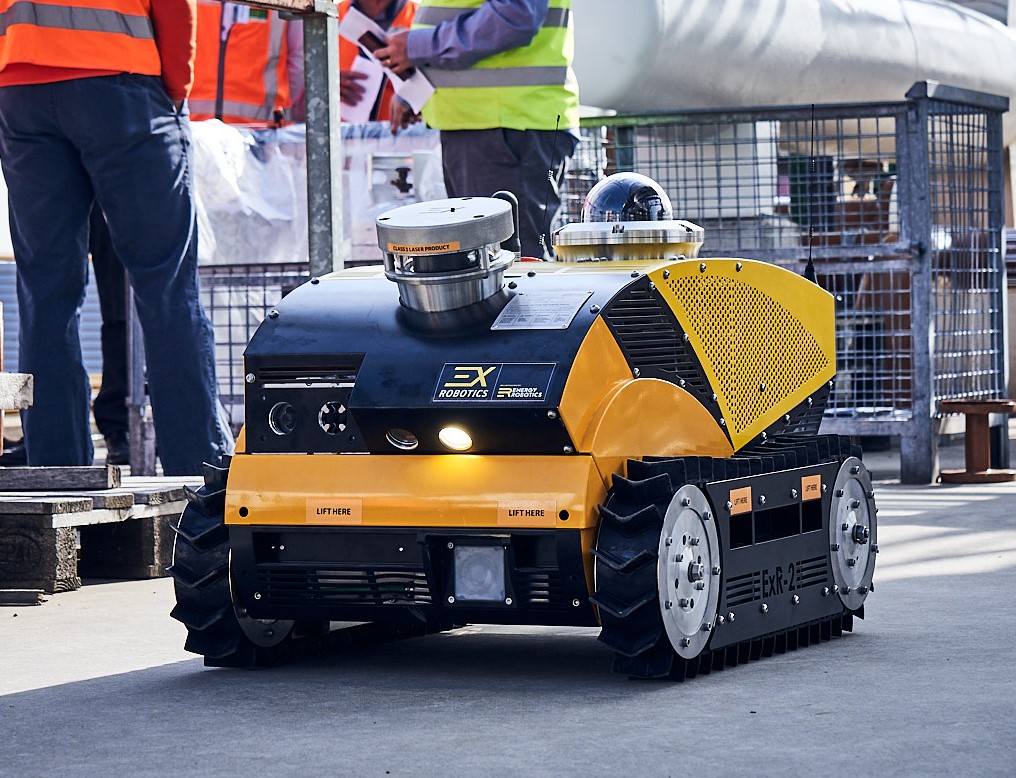
Shell ExR-2.5 inspection robot case study in Offshore Magazine.
Offshore Robotic Inspection Is No Longer a Trial - It’s Operational
–Oped for Offshore Magazine by Mark Mildon, CEO, ExRobotics
For offshore operators, inspection has always been constrained by logistics.
Helicopter schedules. Weather windows. Bed space. Permit-to-work complexity.
In an era of reduced manning and aging infrastructure, those constraints are intensifying. Many offshore assets were never designed for today’s workforce realities. At the same time, safety and emissions scrutiny continues to increase.
The question is no longer whether platforms can be inspected. It is whether they can be inspected consistently, frequently and safely enough to meet modern expectations.
Offshore has moved beyond robotics demonstrations. What matters now is operational autonomy - repeatable robotic missions embedded into daily asset management.
At ExRobotics, our focus is enabling smart robotic missions that deliver better data, boost productivity and keep offshore operations on track.
Our ExR-2.5 inspection robots have completed thousands of successful missions and been deployed by major operators including Shell, BP and Repsol, supporting inspections across upstream, downstream, LNG and chemical facilities.
Inspection Built for a Different Era
Traditional offshore inspection relies on physical presence. Technicians enter hazardous zones to perform visual checks, read gauges, listen for abnormal sounds and verify asset integrity.
These routines remain essential, but they are periodic by nature. They depend on shift patterns, weather access and time pressure. A minor shutdown can require mobilising personnel from another installation hours away. Every offshore visit carries cost and risk.
Autonomous robotic missions introduce a different model. Instead of periodic inspection, data collection becomes continuous and structured. Robots follow the same routes, stop at the same inspection points and generate comparable datasets over time.
That repeatability turns subjective observations into measurable trends particularly valuable for Normally Unmanned Installations (NUIs), where access is limited.
Operating 175km Offshore
In 2024, Shell deployed our ExR-2.5 inspection robot on one if its Normally Unmanned Installation offshore platforms, located 175km offshore and 16km from the nearest manned facility.
The platform had no safe zones, no workshop facilities and no resident maintenance staff. Any intervention required offshore mobilisation.
Following the commissioning of a new pump module, the operator sought to reduce unplanned downtime without increasing offshore visits. The objective was clear: introduce predictive inspection while minimising human exposure.
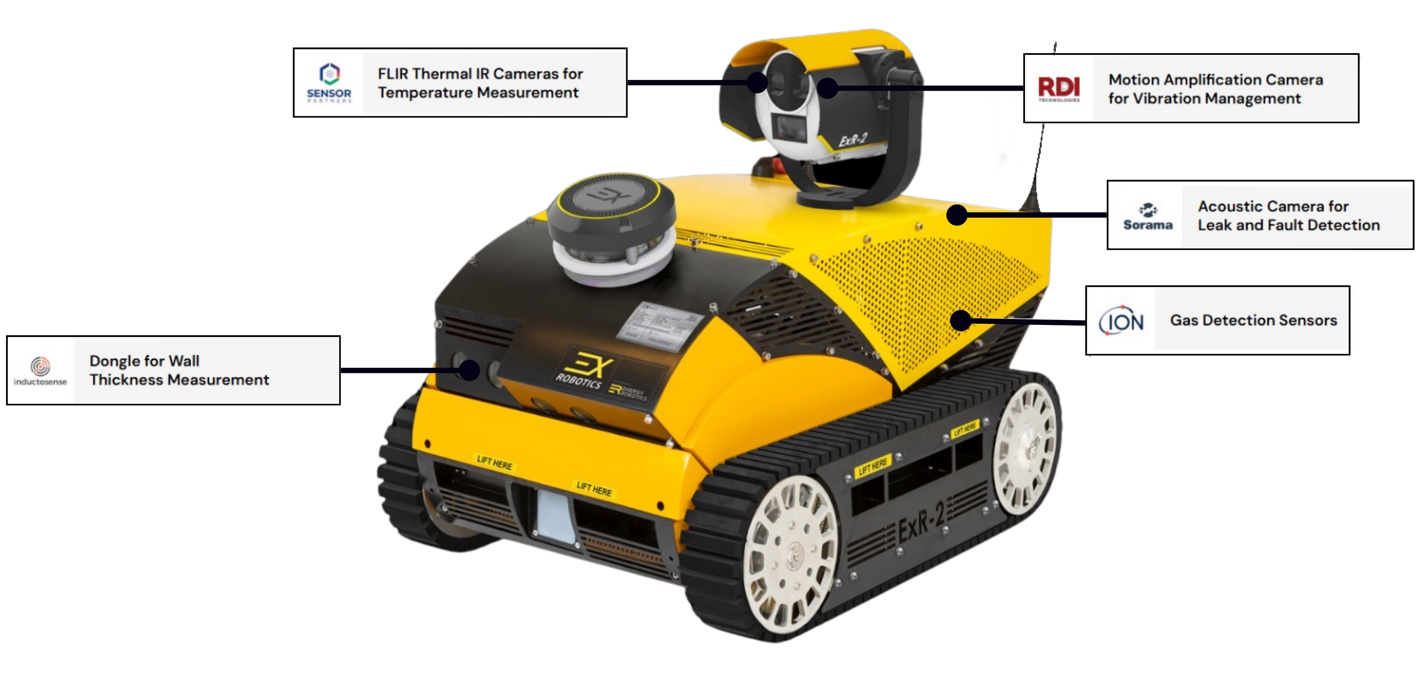
The IECEx Zone 1-certified ExR-2 inspection robot conducted twice-daily rounds, collecting:
• Pressure and temperature readings
• Vibration indicators
• Gas and liquid seepage detection
• Visual and thermal inspection imagery
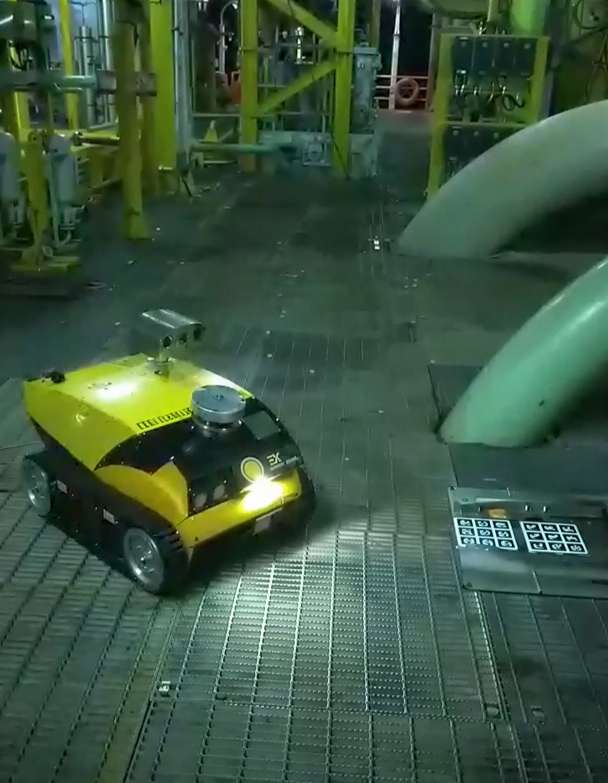
The environment was demanding. The robot navigated narrow corridors, travelled across open steel grid mesh flooring and operated in a fully hazardous Zone 1 area exposed to salt spray and heavy weather. It inspected 20 defined points of interest before returning to an Ex-certified induction charging dock.
Preparation reduced risk. Grid mesh flooring was replicated onshore to validate manoeuvrability. The platform’s digital twin was used to simulate routes. Wireless coverage and docking placement were verified.
The robot was integrated into the platform’s routine inspection workflow as a remote monitoring asset supporting predictive maintenance.
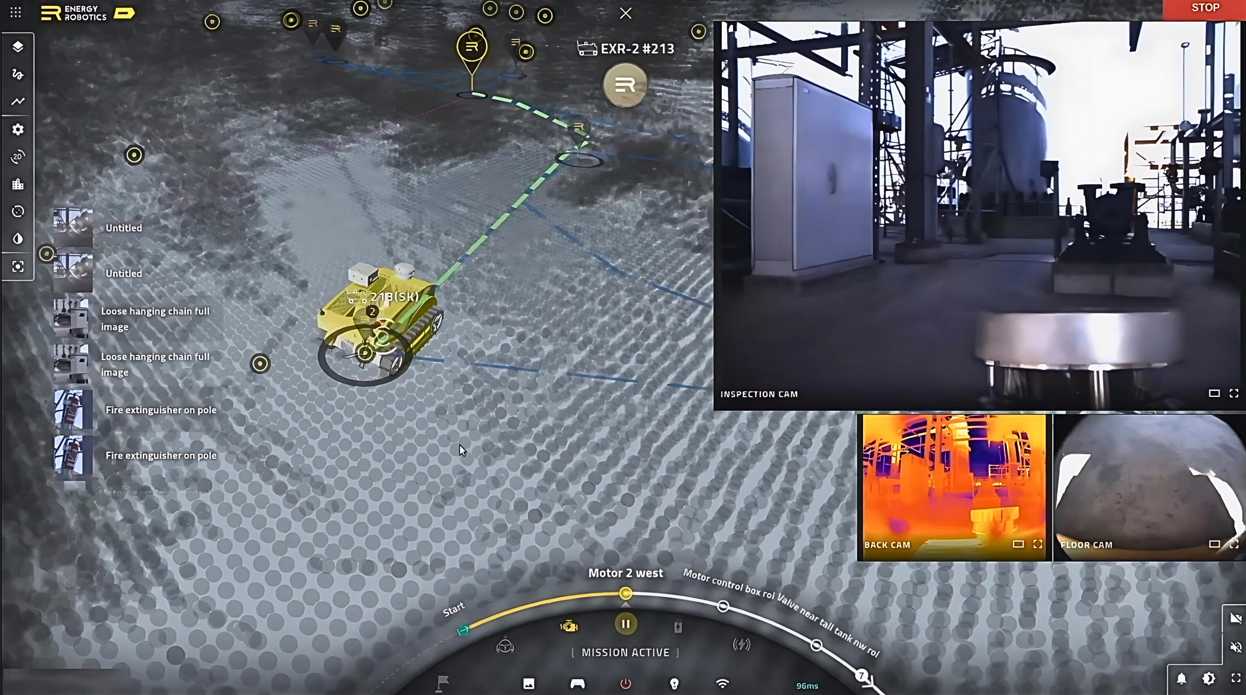
After each mission, inspection data – including pressures, temperatures, vibration readings and visual and thermal imagery – was transmitted to onshore engineers for analysis.
Missions were supervised remotely by a human robot supervisor, who could review alerts and operational conditions from more than 1,000km away.
In the event of a shutdown or anomaly, the robot could inspect equipment immediately, allowing engineers to assess the situation and determine whether personnel needed to travel from the nearest manned installation. The robot examined critical equipment once or twice every day. It was not practical nor affordable for human operators to travel to this unmanned facility every day, especially during bad weather.
Six Months Without Physical Intervention
Six months after commissioning:
• 80% of missions were completed without intervention
• The remainder were completed following minor remote adjustments
• 1,997 inspection points were recorded
• 9.33km were travelled
• No physical servicing was required offshore
For a platform without maintenance facilities, that reliability was critical. Returning the robot to shore would have involved significant cost and delay.
Instead, it delivered twice-daily inspection data without increasing offshore headcount

A Structural Shift Offshore
Ex-certified autonomous robots are engineered to operate safely in hazardous environments without becoming an ignition source. They can continue operating in the presence of gas, localising and documenting issues instead of triggering immediate evacuation.
For offshore operators, that creates time and clarity. Robots permanently based on a platform provide constant situational awareness, helping distinguish between transient anomalies and genuine risks while reducing unnecessary shutdowns.
Autonomous inspection systems are not a replacement for offshore crews.
They are an enabling layer within a broader strategy that includes fixed detectors and aerial monitoring.
But they shift inspection from periodic and reactive to persistent and data-driven.
Offshore autonomy is no longer experimental.
It is operational.
About the Author:
Mark Mildon is the CEO of ExRobotics since 2023. He has an MEng from Durham University and an MBA from INSEAD. He spent 20+ years in the Automotive industry in a variety of roles across the supply chain and OEMs.
About ExRobotics
With over 100 successful deployments, ExRobotics specialises in Ex-certified autonomous inspection robots for hazardous industrial environments. Headquartered in Delft, the Netherlands, the company designs and manufactures ATEX and IECEx Zone 1-certified robots that enable safer, more efficient and lower-emission operations for leading global energy and chemical companies. ExRobotics operates a certified ISO/IEC 80079-34 production system and delivers robots worldwide.
www.exrobotics.com